Prophets
Muhammad (peace be upon him) was born in Makkah in the year 570, during the period of history Europeans called the Middle Ages. Muhammad was the son of Aaminah and Abdullah
Who was Muhammed?
Muhammad (peace be upon him) was born in Makkah in 570, during what Europeans call the Middle Ages. He was the son of Aaminah and Abdullah of the Quraysh tribe and a direct descendant of Ishmael, the son of Prophet Abraham. His father passed away before his birth and his mother died when he was six, after which he was raised first by his grandfather, the chief of Makkah, and then by his uncle Abu Talib.
In his youth, Muhammad worked as a shepherd. As he matured, he became known for his honesty, generosity, and integrity, earning the title al-Amin — “the trustworthy.” He was often sought out to mediate disputes and advise the people of Makkah. At 25, he married Khadijah, a respected and successful businesswoman. Together they had two sons and four daughters and enjoyed a strong, happy marriage.
Reflective by nature, Muhammad was deeply troubled by the moral decline of his society. He would retreat to the cave of Hira on Jabal an-Nur, the “Mountain of Light,” where he spent time in meditation and contemplation.


What How did Muhammed Become A Messenger of God?
At age 40, during a period of retreat and meditation, Muhammad (peace be upon him) received his first revelation from God through the Archangel Gabriel. These revelations continued for 23 years and became the Qur’an.
Muhammad began conveying God’s message to the people of Makkah, who were idol worshippers and rejected his call to worship One God. They persecuted him and the small group of early Muslims severely.
In 622, God instructed the believers to migrate. This migration — the Hijrah — from Makkah to Madinah, 260 miles north, marks the beginning of the Islamic calendar. Madinah became a safe and supportive home where the Muslim community strengthened and grew.
Years later, Muhammad and his followers returned peacefully to Makkah and forgave their former enemies. They cleansed the Ka’bah — originally built by Abraham — of idols and restored it as a sanctuary dedicated to the worship of One God.
Before his passing at 63, most of Arabia had accepted his message. Within a century, Islam had spread west to Spain and east to China.
EBOOK
Apart from the Qur’an are there any other sacred sources?
Yes, the Sunnah — the practice and example of the Prophet Muhammad (peace and blessings be upon him) — is the second source of inspiration and instruction for Muslims. Belief in the Sunnah is part of the Islamic faith. The Prophet’s Sunnah and sayings were documented extensively by his contemporaries and are known as hadith. Here are a few examples:
“None of you truly believes until he wishes for his brother what he wishes for himself.”
“He who eats his fill while his neighbor goes without food is not a believer.”
“God does not judge you according to your bodies and appearances, but He looks into your hearts and observes your deeds.”
“Whoever does not express his gratitude to people shall never be grateful to God.”
“Show mercy to those on earth; the One in Heaven will show mercy to you.”
“God is gentle and loves gentleness.”
“O people, listen to me in earnest: worship God Almighty, perform your five daily prayers, fast during the month of Ramadan, give regular charity, and perform the pilgrimage if you can afford to.”
The Prophet also said:
A man walking along a path felt very thirsty. Reaching a well, he went down, drank, and came out. Then he saw a dog with its tongue hanging out, trying to lick the mud to quench its thirst. Realizing the dog felt the same thirst he had felt, he went back down, filled his shoe with water, and gave the dog a drink. God forgave his sins for this action.
When asked, “Messenger of God, are we rewarded for kindness to animals?” he replied, “There is a reward for kindness to every living being.”
“Know that every Muslim is the brother of another Muslim. You are equal. No one has superiority over another except by piety and good actions.”
“I leave behind two things; if you follow them, you will never go astray: the Book of God (the Qur’an) and my example.”
“The world is green and beautiful, and God has appointed you as His guardians over it.”
“Forgive him who wrongs you; join with him who cuts you off; do good to him who does evil to you; and speak the truth even if it is against yourself.”
EBOOK


How did Prophet Muhammad (Peace Be Upon Him) relate to Christians?
The earliest interfaith dialogue between Christians and Muslims began early in Muhammad’s Prophethood. As persecution in Makkah intensified, the Prophet sent some of his followers to seek refuge with the Negus of Abyssinia, a just Christian king. After hearing the Qur’anic verses about Mary and Jesus, the Negus recognized them as divine revelation and granted the Muslims protection.
The Prophet regarded Christians as “People of the Book.” He treated them with respect, formed treaties with Christian tribes, and guaranteed them freedom to practice their faith and manage their own affairs under Islamic law.
A notable example occurred when a delegation of Christians from Najran visited the Prophet in Madinah. He hosted them warmly, allowing them to stay in his Mosque. When they stepped out to perform their church prayers, he instead offered them space inside the Mosque. Although they did not agree on every theological point, they returned home with a treaty of peace and cooperation.
These events stand as lasting models for Muslims and Christians seeking stronger interfaith relations today.
EBOOK
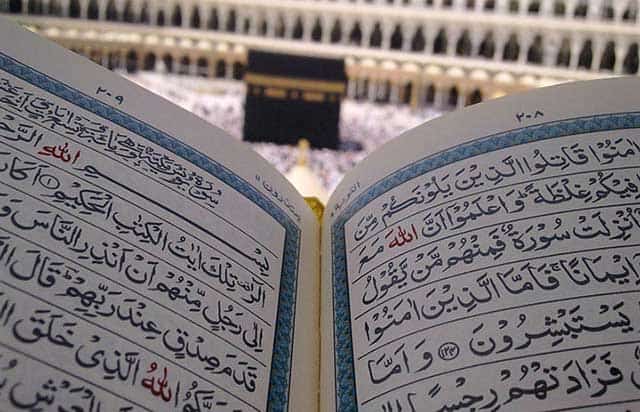
What is the Qur'an?
Muslims believe the Qur’an is the exact word of God, revealed through the Archangel Gabriel to Prophet Muhammad (peace be upon him).
The Prophet and his followers memorized the Qur’an, dictated it to companions, and scribes wrote it down and cross-checked it during his lifetime. Not one word of its 114 chapters has changed over the centuries. Today, it remains the same unique and miraculous text revealed over fourteen centuries ago.
The Qur’an is the primary source of Muslim faith and practice. It addresses all aspects of human life — wisdom, doctrine, worship, and law — with its central theme being the relationship between God and His creation. It also provides guidance for just societies, ethical conduct, and fair economic principles.
"He (God) has sent down to you the Book (the Qur’an) with truth, confirming what was revealed before; And He sent down the Torah (of Moses) and the Gospel (of Jesus) before this as a guide in humankind; and He sent down the Criterion (the Qur’an)." (Qur’an 3:3-4)

What do Muslims think about Jesus?
Muslims deeply love and respect Jesus (peace be upon him) and regard him as one of God’s greatest prophets. The Qur’an affirms his miraculous virgin birth, dedicates an entire chapter to Mary, and honors both mother and son. It recounts the angelic announcement to Mary, her question, and God’s response that He creates as He wills—just as He created Adam without parents.
The Qur’an also describes Jesus’ miracles: forming a bird from clay, healing the blind and lepers, and raising the dead—all by God’s permission. Like earlier prophets, Jesus came to confirm belief in One God and uphold the Torah while easing some restrictions.
The Prophet Muhammad taught that anyone who believes in God’s oneness, Muhammad as His messenger, and Jesus as God’s servant, messenger, and spirit from Him—along with belief in Paradise and Hell—will be admitted to Heaven.
EBOOK

History

Islam

Jihad

Women

Family

Science

Interfaith

Prophets
Are you curious about Islam? Have you been looking for answers?
We have addressed many of the questions you may have about Islam.
Dig deeper. Watch a short video, download an eBook or chat with an expert.