Science
Like many of their later Renaissance counterparts, most Muslim scientists and thinkers were multidisciplinary, and produced remarkable works in many fields
How did the spread of Islam affect the World?
After Prophet Muhammad’s death, the Muslim community grew rapidly. Within decades, people across Africa, Asia, and Europe had embraced Islam. One key reason for its peaceful spread was the clarity and purity of its message—belief in one God—combined with strong principles of equality, justice, and freedom. This created a united community where people could travel safely from Spain to China without borders or fear.
As millions accepted Islam, they brought with them the knowledge of ancient civilizations such as Egypt, Greece, India, Persia, and Rome. Muslims valued this heritage, preserving libraries and honoring scholars across these regions. Many Muslim scholars traveled in search of knowledge and translated major philosophical and scientific works from Greek, Syriac, Pahlavi, and Sanskrit into Arabic. This made Arabic the global language of scholarship and attracted students from around the world.
By 850, most of Aristotle’s works, much of Plato’s writings, and key Greek texts in astronomy, mathematics, and medicine—including Ptolemy’s Almagest, Euclid’s Elements, and the works of Hippocrates and Galen—had been translated into Arabic. Important scientific texts from Persia and India were also rendered into Arabic. For the next 700 years, Arabic became the leading scientific language and the main repository of ancient knowledge.
Muslim scholars went beyond preservation—they expanded scientific understanding and laid foundations that later fueled the European Renaissance. They excelled in fields such as art, architecture, astronomy, geography, history, literature, medicine, mathematics, and physics. Transformative contributions like algebra, Arabic numerals, and the concept of zero emerged from their work. They also developed advanced instruments—such as the astrolabe and quadrant—and produced detailed navigational maps that enabled future European exploration.
Who were some of the great Muslim Scientists and Thinkers?
Like many of their later Renaissance counterparts, most Muslim scientists and thinkers were multidisciplinary, and produced remarkable works in many fields. A few of the more famous scholars include:
• Ibn Hayyan (Geber, 738-813) - known as the father of chemistry.
• Al-Khawarizmi (Algorizm, 750-850) - invented algebra and was instrumental in the development of trigonometry, calculus, and the use of algorithms based on which modern computers function.
• Ibn Firnas (died 888) - developed the mechanics of flight before DaVinci; he also built a planetarium.
• Al-Razi (Rhazes, 864-930) - a great physician who identified and treated smallpox.
• Al-Zahravi (Albucasis, 936-1013) - recognized as the father of modern surgery.
• Ibn Sina (Avicenna, 981-1037) - a very well-known physician, authored the "Cannon of Medicine" and the "Book of Healing." His writings were considered the authority of medicine for over five hundred years.
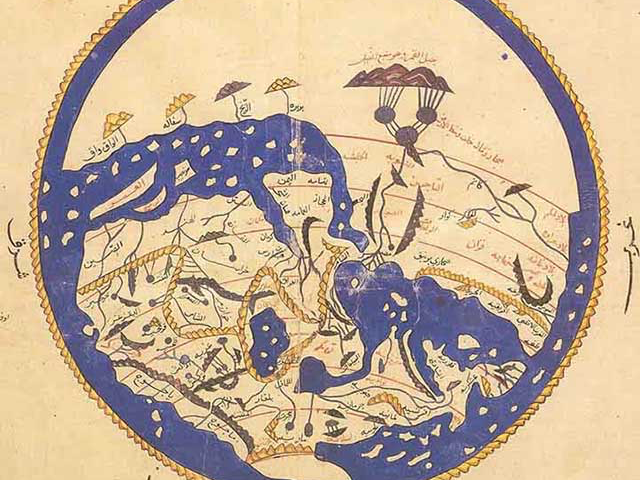
• Al-Idrisi (Dreses, 1099-1166) - made the first world maps that clearly showed North, Central, and South America.
• Ibn Rushd (Averroes, 1128-1198) - a great philosopher, astronomer, and physician.
• Ibn Batuta (1304-1378) - an avid world traveler, writer and geographer; he visited most of the known world from Spain, to parts of Africa, to China.
EBOOK

History

Islam

Jihad

Women

Family

Science

Interfaith

Prophets
Are you curious about Islam? Have you been looking for answers?
We have addressed many of the questions you may have about Islam.
Dig deeper. Watch a short video, download an eBook or chat with an expert.