Family
The family is the foundation of Islamic society. The peace and security offered by a stable family unit is greatly valued and seen as essential for the spiritual growth of its members
Why is the family so important to Muslims?
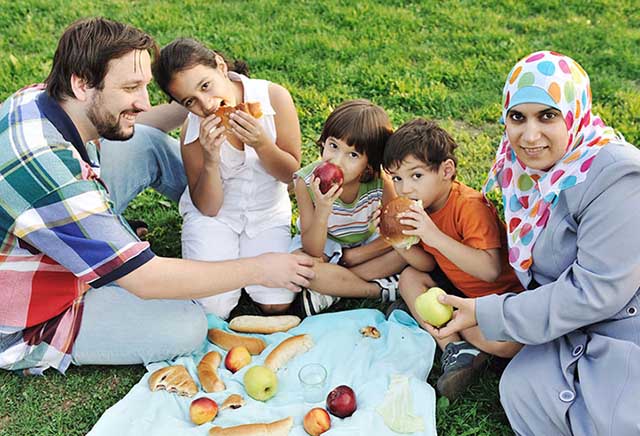
The family is the cornerstone of Islamic society. A stable family unit provides peace and security, which are essential for the spiritual growth of its members. In Muslim communities, it is common for large, extended families to live together, offering comfort, support, and protection to one another.
Parents are deeply respected in Islam, with mothers holding a particularly honored position. God says in the Qur’an: “And we have enjoined upon man to be good to his parents. With difficulty upon difficulty did his mother bear him, and wean him for two years. Show gratitude to Me and to your parents; to Me is your final goal!” (Qur’an 31:14)
Marriage and family life are strongly encouraged. “And among His signs is that He created for you mates from among yourselves; that you may find peace with them. And He put between you, love and compassion. Surely in this are signs for people who reflect.” (Qur’an 30:21)
A Muslim marriage is both a sacred act and a legal contract, allowing either partner to set legitimate conditions. Customs vary across countries, but the institution remains central. Prophet Muhammad said: “When a servant of God marries, he completes half his faith.” Marriage forms the foundation upon which families are built.
How do Muslims view the elderly, death and the afterlife?
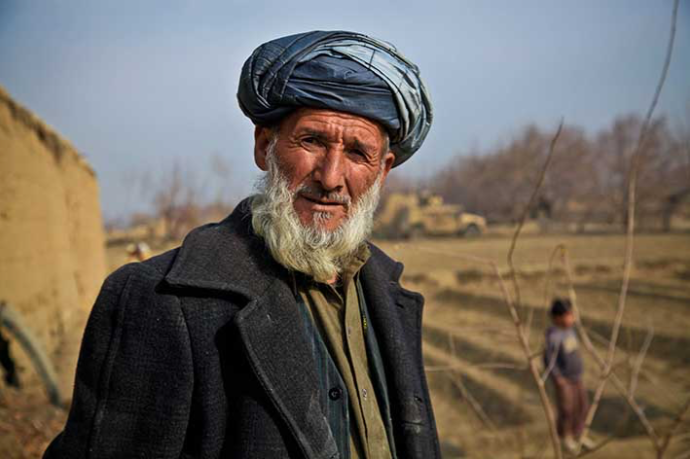
Muslims are taught to respect and care for the elderly. It is common for children, parents, grandparents, and sometimes great-grandparents to live together in one household.
Serving one’s parents is considered a duty second only to worshipping God. Showing irritation toward them, even when aging makes them difficult, is deemed unacceptable.
God says in the Qur’an: “Your Lord has decreed that you worship none but Him, and be kind to your parents. If either or both of them reach old age with you, do not even say ‘uff’ to them or scold them, but speak to them in terms of honor and kindness. Lower to them the wing of humility, and say, ‘My Lord! Have mercy on them, for they did care for me when I was young.’” (Qur’an 17:23-24)
When a Muslim passes away, they are washed—usually by a family member—wrapped in a clean white cloth, and buried with a prayer, ideally on the same day.
EBOOK

History

Islam

Jihad

Women

Family

Science

Interfaith

Prophets
Are you curious about Islam? Have you been looking for answers?
We have addressed many of the questions you may have about Islam.
Dig deeper. Watch a short video, download an eBook or chat with an expert.