Jihad
Jihad is a beautiful, yet misunderstood, Islamic concept. The Arabic word “Jihad” is derived from the root word “Jahada” which means, “to strive” - to struggle, to strain, to exert, to persevere and to defend
How did the spread of Islam affect the World?
Jihad is a beautiful and deeply meaningful concept in Islam, though it is often widely misunderstood. The Arabic word “Jihad” is derived from the root word “Jahada,” which means “to strive.” This striving encompasses many aspects: to struggle, to strain, to exert effort, to endeavor, to persevere, and to defend. All of these terms reflect different dimensions of Jihad, showing that it is not limited to one form of action but is a holistic concept that guides the believer in striving for goodness, justice, and faithfulness in the path of God.
The Qur’an emphasizes the importance of Jihad in the life of a believer, highlighting both its spiritual and practical dimensions:
“O you who believe! Shall I show you a trade that will save you from a great punishment? You should believe in God and His Messenger, and you should strive (to the best of your ability) in the way of God, with your possessions and yourself. That is better for you, if only you knew.” (Qur’an 61:10-11)
Here, striving is not merely physical or material; it involves dedicating oneself wholly — in heart, mind, and action — to live according to God’s guidance. Jihad encourages believers to give their best in all aspects of life: to improve themselves, support their communities, uphold justice, defend what is right, and persistently pursue the path of truth and righteousness. It is this comprehensive understanding of Jihad — as effort, devotion, and moral courage — that makes it a beautiful and noble principle in Islam.
Is Jihad Holy War?
No. Definitely not. Jihad should never be confused with Holy War — an idea that has no place in Islam. The concept of Holy War does not exist anywhere in the Qur’an, nor is it found in classical Islamic teaching. It is a foreign concept introduced by the Crusaders who waged “Holy War” against the Muslim “infidels” in the Holy Land. Contrary to popular opinion, Jihad is not a means of forcing Islam on others. It should never be viewed as an expansionist, proselytizing movement. However, historically, and even in today’s times, some Muslims have taken it as such. This distortion of the virtuous concept of Jihad is in total contradiction to authentic Islamic teachings.
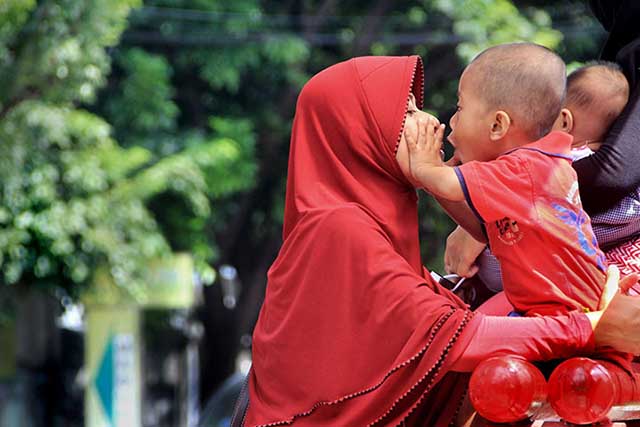
Jihad is the noble effort of improving oneself, one’s family and community, one’s nation and the world at large. Jihad is the struggle that a mother undergoes during pregnancy, childbirth, and the raising of her child; it is years of hard work that a student puts towards a good education; it is the sacrifice that a firefighter makes when risking his own life to save another; and it is the courage that a soldier has on the battlefield in the defense of his life, his country, his freedom and his beliefs.
EBOOK
Why is Islam often misunderstood?
In today's turbulent world, Islam is often on the front page - mostly for the wrong reasons. Islam means peace and the vast majority of the Muslims experience this peace in their lives by following its tenets. But there have been people who have hijacked Islam and tried to portray it as a violence tolerating faith; citing random acts of despicable violent actions for personal and political gains. Seeing a faith through explosive world events, judging it by the actions of a misguided few, and the resulting revenues generated by the media frenzy, are some of the reasons why Islam is often misunderstood.
This misrepresentation is intentional. Some politicians, religious leaders and media associate Islam with the inhumane acts of a handful which grants them success in driving larger numbers of people to vote for them; to donate towards their ministries; to read their newspapers, watch their television programs and listen to their radio shows.
However, with an increasing number of Muslims speaking out against this falsehood; the true and peaceful nature of Islam is becoming more evident. Muslims are standing up against terrorism, against the persecution and killing of innocent people, and against those who perpetrate such injustice in the name of any faith.
The very word "Islam" means peace. A fifth of the world's population is reclaiming this peace as their chosen way of life.
EBOOK
What’s does Islam say about War?
Islam permits fighting in self-defense, in defense of one's faith, or on the part of those whose basic rights have been violated. It lays down strict rules of combat that include prohibitions against harming civilians, destroying crops, trees, and livestock. As Muslims see it, injustice would be triumphant in the world if good people were not prepared to fight for a righteous cause.
God says in the Qur'an: "Permission (to defend) has been granted to those who are being fought against; that they have been oppressed. Verily, God has the power to help them. Those who were unjustly expelled from their homes for no other reason than their saying: 'God is our Lord.' If God were not to repel some human beings through others, monasteries, churches, synagogues, and mosques, wherein the name of God is mentioned, would have certainly been destroyed. God will definitely help those who will help Him. Verily, God is Immensely Strong, Mighty." (Qur'an 22:39-40)
War is the last resort and is subject to the rigorous conditions laid down by the sacred law. The often misunderstood and overused term jihad literally means "struggle" and not "holy war" (a term not found anywhere in the Qur'an). Jihad, as Islamic concept, can be on a personal level - inner struggle against evil within oneself; struggle for decency and goodness on the social level; and struggle on the battlefield, if and when necessary
EBOOK
How does Islam guarantee Human Rights?
According to the Qur'an, God has created all of humankind equal, and has given each person the right to pursue their own destiny. The life, honor and property of all people in a Muslim society are considered sacred, whether the person is Muslim or not. Racism, sexism and prejudice of any sort are unacceptable in Islam.
The Qur'an speaks of human equality in the following terms: "O humankind! We created you from a male and female, and made you into nations and tribes, so that you may come to know one another. Truly, the most honored of you in God's sight is the greatest of you in piety. God is All-Knowing, All-Aware." (Qur'an 49:13)
The right to life is the most basic of human rights; the Qur'an equates the unjust killing of a single person to killing all of humankind: "And whoever kills a soul…, should be as though he has killed all of humankind." (Qur'an 5:32)
Dealing equitably and protecting the rights of every individual form the cornerstone of Muslim societies. God further states in the Qur'an: "O you who believe! Stand up firmly for God, as witnesses to fair dealing, and let not hatred of a people invite you to act inequitably; act justly, that is nearer to piety, and be conscious of (your duty to) God, surely God is aware of all that you do." (Qur'an 5:8).
EBOOK

History

Islam

Jihad

Women

Family

Science

Interfaith

Prophets
Are you curious about Islam? Have you been looking for answers?
We have addressed many of the questions you may have about Islam.
Dig deeper. Watch a short video, download an eBook or chat with an expert.